

How Artificial Intelligence Is Rewriting Music History: The Dawn of a Sonic Revolution
 2025
2025How Artificial Intelligence Is Rewriting Music History: The Dawn of a Sonic Revolution
The music industry is changing fast. AI-driven music composition is now a real thing, changing how we hear music.

Back in the day, Alan Turing saw computers’ role in music. Now, AI is used in many music-making steps, from composition to production. This new sound world mixes digital and divine, as seen in Fei Neon’s work.
Key Takeaways
- AI is transforming music composition and production.
- The technology is pushing the boundaries of sound creation.
- Artists are now collaborating with AI to create new music.
- The future of music is being shaped by AI-driven innovation.
- AI music composition is becoming increasingly sophisticated.
The Historical Context of Artificial Intelligence in Music
The journey of AI in music started with simple experiments. Now, it can change how we make music. AI’s history in music is one of fast growth, from basic tests to advanced algorithms that are reshaping the industry.
From Early Experiments to Modern Algorithms
Alan Turing showed in 1951 how computers could make music. This was the start of AI’s role in music. Early work in algorithmic composition helped create today’s AI music systems that can make complex songs.
Pioneering Systems and Their Limitations
Early AI music systems were held back by their programming and data. They couldn’t fully grasp or mimic human music-making skills. “The early systems were more like complex calculators than creative partners.”
The Neural Network Revolution
Neural networks changed AI in music. These systems learn from big datasets, understand complex patterns, and create music that’s getting better. Neural networks have enabled AI to move from simple melody generation to complex symphony composition.

Redefining Musical Creation in the Digital Age
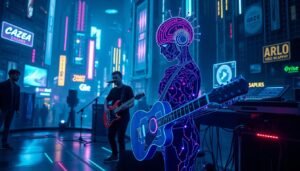
Today, AI is more than just a tool for musicians; it’s a partner. AI algorithms can offer melodies, harmonies, and even whole songs.
“AI is redefining the boundaries of musical creation, enabling artists to explore new sounds and styles.”
This partnership is changing music production and consumption. It’s opening up new chances for artists and listeners.
AI as a Creative Collaborator in Composition
Artificial intelligence is changing how we make music, opening up new ways to express ourselves. By working together, humans and AI create music that’s never been heard before.

Machine Learning Models for Melody and Harmony
Machine learning is now used to make melodies and harmonies. These models study lots of music to learn how to create new sounds.
Pattern Recognition in Musical Structures
AI can spot complex patterns in music. This helps make melodies and harmonies that are both simple and complex. It’s great for making music that fits certain styles.
Generative Models and Their Creative Output
Generative models, like those in Udio, Suno, and Stable Audio, let users make music with just a few words. They can create everything from simple tunes to full symphonies.
AI-Generated Symphonies and Genre Fusion
AI can make music in many styles and even mix them to create new sounds. This has led to AI symphonies that mix old and new music.
This blending of genres is a big part of AI’s role in music. It lets us hear things we never thought possible before.
Challenging Traditional Notions of Authorship
Using AI in music raises big questions about who makes the music. As AI music becomes more common, it makes us think differently about being a composer.
Working with AI makes us question what it means to be creative. It makes us see the composer’s role in a new light in today’s world.
The Rise of Virtual Artists and Vocal Synthesis
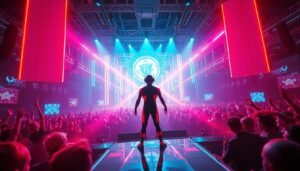
The music world is changing fast with the rise of virtual artists. AI-generated vocals are getting better and better. Artists like Hatsune Miku and Fei Neon are changing how we see music with their AI-driven shows.
The Technology Behind AI Vocals
AI vocals use advanced tech to sound real. This tech lets us create amazing vocal performances.
Voice Modeling and Synthesis Techniques
Voice modeling captures a singer’s voice traits. Synthesis then makes the vocals. Together, they create AI vocals that feel almost human.
Emotional Expression in AI-Generated Vocals
Getting emotions right in AI vocals was tough. But now, AI vocals can show a wide range of feelings. This makes them more real and interesting to listen to.
Fei Neon: Canada’s Breakthrough AI Artist
Fei Neon is a top virtual artist from Canada. Known for its unique sound, Fei Neon shows AI’s power in music.
Multilingual Performances and Cultural Boundaries
AI vocals can perform in many languages. This lets virtual artists connect with people worldwide. It’s a big step for artists to share their music globally.
AI is getting better, and virtual artists will be key in music’s future. The mix of human creativity and AI tech is changing music forever.
How Artificial Intelligence in Music Production is Reshaping the Industry
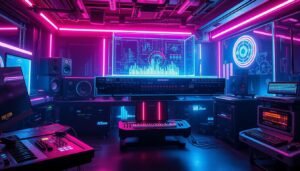
AI tools are changing music production, opening up new creative paths. This shift is more than a trend; it’s a revolution. It’s changing the industry in many ways, from AI-powered studio tools to making music creation more accessible.
AI-Powered Studio Tools and Techniques
AI has brought advanced studio tools and techniques into music production. These tools aim to make the creative process more efficient and innovative.
Automated Mixing and Mastering
Automated mixing and mastering have seen big improvements with AI. AI algorithms can now analyze and adjust tracks for top-notch sound quality. This saves time and ensures consistent sound across different projects.
AI-Assisted Sound Design
AI-assisted sound design is also making a big impact. AI can create unique sounds and textures. This helps sound designers and musicians create more complex and interesting music.
Democratization of Music Creation
AI is making music creation more accessible. With AI music production tools, anyone can make high-quality music, not just trained musicians. This opens up new creative paths in the music industry.
- More people can create music without needing traditional musical skills.
- AI tools provide a platform for new talent to emerge.
- The barriers to entry in the music industry are being lowered.
Canadian Music Industry’s AI Innovation Hub
Canada is becoming a key hub for AI in music. Its vibrant music scene and tech advancements are perfect for AI music production to thrive. Canadian artists and producers are leading the way in using AI.
By embracing AI, Canada’s music industry is boosting its creativity. It’s also setting a global example. The future of music production is being shaped here, with effects felt worldwide.
Conclusion: Harmonizing Human Creativity with Artificial Intelligence
Artificial intelligence in music has opened new doors for creativity. It changes how we make and compose music. As AI grows, it will help, not replace, human creativity.
The future of AI in music will bring more personal and interactive experiences. Artists will be able to make unique experiences for their fans.
Humans and AI working together will change the music world. AI tools are becoming more common. Fei Neon’s success shows AI’s power in music.
It’s important to think about the ethics of AI music. We must make sure everyone benefits from AI’s role in music.
AI and human creativity together will shape music’s future. By using AI as a partner, artists can explore new musical ideas. This will expand what’s possible in music.
FAQ
What is the role of artificial intelligence in music composition?
Artificial intelligence is changing music composition. It creates melodies and harmonies, leading to new musical expressions. Machine learning models analyze and generate music, making AI-generated symphonies and genre fusion possible.
How is AI changing the music production industry?
AI is transforming the music production industry. It offers AI-powered studio tools and techniques. This makes music creation more accessible and opens up new ways to express oneself. Canada is becoming a key player in AI innovation in music.
What is the significance of virtual artists in the music industry?
Virtual artists, like Fei Neon, are expanding music’s possibilities. They perform in multiple languages and bridge cultural gaps. AI vocals, through voice modeling and synthesis, drive this innovation.
How is AI impacting traditional notions of authorship in music?
AI-generated music is questioning traditional authorship in music. It raises questions about human creativity’s role. As AI music grows, it’s changing how we view authorship and creativity.
What is the future of AI in the music industry?
The future of AI in music looks promising. It will see more AI tools for creation, new musical forms, and debates on AI ethics. These factors will shape AI’s role in music.
How is AI being used in music production and post-production?
AI is aiding in music production and post-production. It enhances tasks like mixing, mastering, and vocal processing. AI tools also create beats, melodies, and harmonies.
Can AI truly be creative, or is it just mimicking human creativity?
AI can’t feel emotions or have personal experiences like humans. Yet, it can come up with new musical ideas. The debate on AI’s creativity is ongoing, with some seeing it as a valuable collaborator.
How is the music industry addressing the ethical considerations of AI-generated music?
The music industry is facing ethical challenges with AI music. It deals with authorship, ownership, and copyright issues. As AI music grows, the industry must create new rules to handle these concerns.









Comment